8 Black World Leaders from T&T
1. Kwame Ture
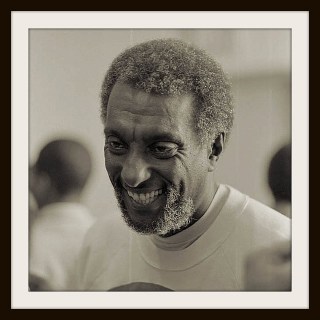
Born Stokely Carmichael in Port-of-Spain in 1941, Kwame Ture was a leader of the civil rights and black power movements. He is credited as one of the key theorists of Black Power – a term he defined extensively in his 1967 book, Black Power: The Politics of Liberation in America – and also with coining the term institutional racism. Ture was a former leader of the Student Non-Violent Coordinating Committee and the Black Panther Party. He was also the founder of the All African People’s Revolutionary Party. Ture died in 1998 and his New York Times obituary quotes him as saying that the prostate cancer, which was his cause of death, was “
given to me by forces of American imperialism and others who conspired with them.”2. Tony Martin
Tony Martin was an activist, noted Marcus Garvey scholar and a founder of the Wellesley College Africana Studies Department. He died in 2013 of unknown causes at age 70. Martin was the author and editor of more than 14 books. His most recent work was the book Caribbean History: From Pre-Colonial Origins to Present. He was born in Port-of-Spain in 1942 and attended primary school with Stokely Carmichael.
Find out more about him
HERE3. CLR James
CLR James was a noted historian, author, socialist theorist, journalist and sports writer. He was born in Tunapuna, Trinidad in 1901. Some of James’ most famous publications include the seminal text on the Haitian Revolution, The Black Jacobins and his autobiographical, Beyond the Boundary. James migrated to England in 1932, but before he left Trinidad, he had already established himself as a revolutionary scholar and activist – he was a pioneer of the fight for Trinidad’s Independence which he started advocating in the late 1920s. In 1935, he became a founding member of the International African Friends of Ethiopia which opposed Italian occupation of the country. James was also active in Marxist labour movements in the US and Pan-African movements around the world. In 1958, he returned to Trinidad to become editor of the pro-Independence newspaper, The Nation. He would late return to England after the fall-out of the West Indian Federation. James died in London in 1989 but was buried in Trinidad
Some of his writings can be found
HERE4. Claudia Jones
Claudia Jones was a communist activist and founder of the Notting Hill Carnival in London, England. Jones was born in Port of Spain in 1915, but her family migrated to the US while she still very young. In New York, as a teenager Jones became involved with the NAACP, campaigns to free the Scottsboro Nine, the Young Communist League and the National Negro Congress. Her role as a political organiser subjected Jones to FBI monitoring and she was eventually arrested and charged with advocating the overthrowing of the US government in 1951. After a long imprisonment and court battle Jones was released, but forced to move to England. In England she continued the fight against racism and became the publisher of The West Indian Gazette.
5. George Padmore
Padmore was a leading Pan-Africanist, journalist and author born Malcolm Meredith Nurse in Arouca, Trinidad in 1903. While in college in the US, Padmore began working with the Workers Communist Party. He would later move to the Soviet Union, Germany and France where he was instrumental in organizing black trade unions in the late 1930s. He would later move to London, and reunite with his childhood friend CLR James becoming a founding member of the International African Friends of Ethiopia. Later, Padmore would become friend with Kwame Nkrumah and in the 1950s woould move to Ghana as one of Nkrumah’s advisers during the Independence movement. Padmore wrote a book about the movement, The Gold Coast Revolution and also worked for Nkrumah’s newspaper The Accra Evening. He died in 1959.
6. Henry Sylvester Williams
Williams was the organiser of the first “Pan African” conference held in England in 1900. He was a lawyer born in Aouca, Trinidad in 1869. Before migrating to the US, Williams worked as a teacher. Williams was also the founder of the Pan African Association which had branches in Jamaica, Trinidad and the US. Williams worked for a number of years as a defence lawyer in South Africa representing black clients, but eventually returned to Trinidad to set up a law firm. He died in 1911.
7. Professor Lennox S. Hinds
Professor Lennox S. Hinds is probably best known as lawyer to exiled revolutionary Assata Shakur. However, long before he became Shakur’s lawyer, the Rutgers University professor of criminal justice had been involved in the civil rights movement starting with his work with the Congress on Racial Equality. Hinds was born in Port of Spain and migrated to the US at age 14. Hinds would later become the director of the National Conference of Black Lawyers representing people and organisations such as Angela Davis, the Black Panther Party, and even the African National Congress and the South West African People’s Organisation.
Read more
HERE and Listen to Hinds speak about Shakur
HERE
8. Horace Ove
Horace Ove is one of the “leading black independent filmmakers to emerge in Britain since the post-war period.” He is the first Black British to direct a feature length film, Pressure (1975). Pressure exposed the harsh realities of racism in Britain and was subsequently banned by the British Film Institute for two years. Ove also directed the first black-financed British feature film, Reggae. One of his most recent films focused on the life of John La Rose the Trinidadian activist, poet, and founder of Beacon Books.
***I must note that there is only one woman on this list and I’m quite disappointed by that. If you know of any women, who contributed to revolutionary movements for civil rights whom I’ve overlooked, please share! Besides that, the list looks at people who worked not only in T&T but as universal citizens.

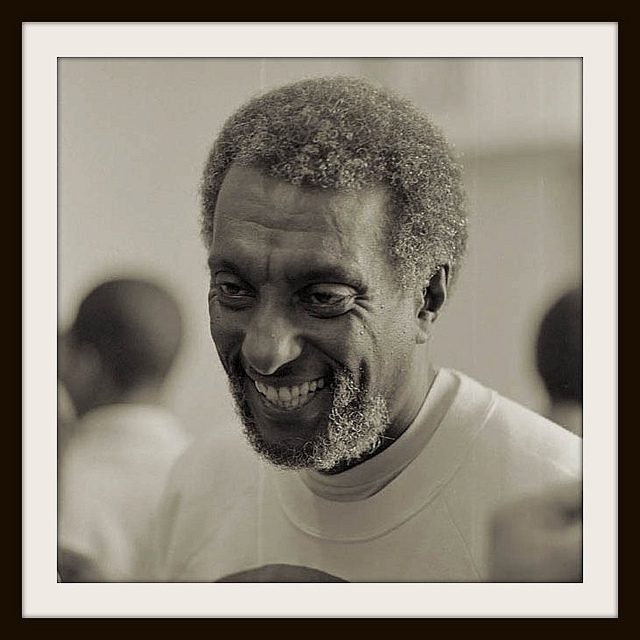 Born Stokely Carmichael in Port-of-Spain in 1941, Kwame Ture was a leader of the civil rights and black power movements. He is credited as one of the key theorists of Black Power – a term he defined extensively in his 1967 book, Black Power: The Politics of Liberation in America – and also with coining the term institutional racism. Ture was a former leader of the Student Non-Violent Coordinating Committee and the Black Panther Party. He was also the founder of the All African People’s Revolutionary Party. Ture died in 1998 and his New York Times obituary quotes him as saying that the prostate cancer, which was his cause of death, was “given to me by forces of American imperialism and others who conspired with them.”


 Zahra Gordon
Leave a comment