
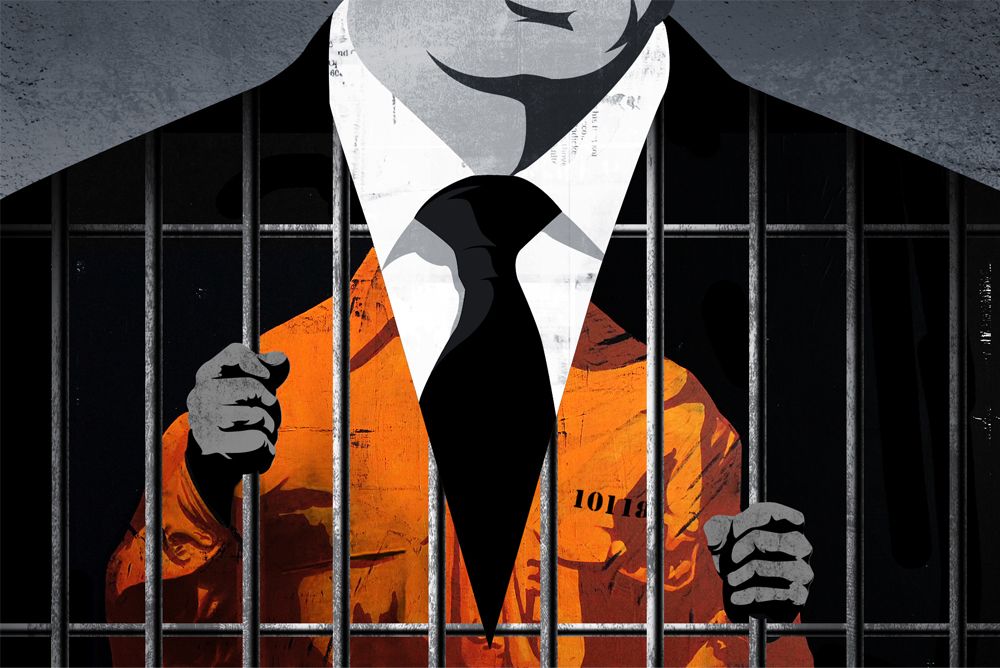
Child rights activist Hazel Thompson-Ahye made some sound points in her Trinidad Express column last week. She identified the fact that many of the responses to the recent upsurge in school violence have been “strident and ill-advised.” Thompson-Ahye is referring to is a taped fight between schoolgirls at the Mucurapo West Secondary School.
Fight is probably too soft a word to describe what was an all out brawl, that was readily view-able on YouTube and Facebook (and which also made it’s way onto the evening news with glaring disregard for media ethics). The brawl showed the young ladies who were fighting had a blatant disregard for authority, as they cursed and beat not only each other, but also the off-duty police officer who stepped in to part the altercation. This behavior is not isolated, however.
If you Google “Trini School Fight”, you’ll find an array of taped violent altercations between school children. And already for the year news reports have been burdened with such headlines as “BOY, 12, CHOKES TEACHER,” “FOUR SCHOOLBOYS CHARGED WITH ROBBERY, INDECENT ASSAULT” and “SCHOOL VIOLENCE AT PRESENTATION COLLEGE: ONE STABBED AND ANOTHER SLITS WRIST.” These cases have now made their way over to the criminal justice system and the general response has been to further criminalize the youth involved.
There have been calls from the Minister of Education and concerned parents for police presence in schools. The Opposition Leader wanted a special boot-camp-styled school for misbehaving children along with a “zero-tolerance” policy. Other news reports cited parents calling for the return of corporal punishment and prayers. The offending children have been labeled as bad and undisciplined. But as Thompson-Ahye pointed out,
“Many children are victims of violence. Many more have witnessed violence in their homes and in their communities. Very few of those children have been treated for post-traumatic stress disorders, and when they act out, we condemn them. We are a violent people.”
Thompson-Ayhe is right. So right. We are a violent people, but in more ways than one. A friend on Facebook posted the other day: “Want to see why we have violence anywhere? Check out how most people use City Gate!” She is also right. She pointed out that it was not only physical violence, but the various ways in which people did not follow the rules on how to use the space. Rush-hour at City Gate can literally be a fight among passengers for seats on the buses and maxis when everyone thinks only about their needs with no consideration for others or order.
Violence cannot only be interpreted as physical assault or identified by the murder rate we are forever counting. It is time for T&T to begin to understand the myriad ways in which violence can be defined and affects our lives.
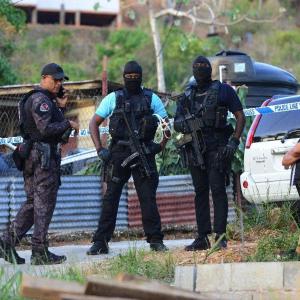
In his article, “The Liberation Imperative of Black Genocide,”Joao H. Costa Vargasfurthers the case for the continuation of black genocide in the Americas using Brazil and the US as examples. He details the various systems that contribute to black genocide in both countries and the violence that underpins those systems. I’ve quoted Vargas on this before, but his points seem to be pertinent to…well, life on the whole. He said,
“Everyday acts of hostility can be equated to symbolic violence…which also energizes institutions such as schools, hospitals, workplaces, news media, and, of course, the criminal-justice system. Symbolic violence offers the conceptual and factual link between a myriad of seemingly disparate events and the systemic physical violence that leads to massive incarceration and premature death.”
Vargas said symbolic violence is integral to genocide. The dimensions of genocide in the US, he also pointed out, include, “mass imprisonment, police brutality, high infant mortality, early death (of children men, women, and the elderly), deficient medical treatment, lack of competitive education and economic opportunites, everyday violence in the inner cities and chronic depression.”
Looking at just one of those dimension in T&T provides evidence of symbolic violence. If the hostile passengers at City Gate are demnstrative of why we have violence anywhere, what about or healthcare system and its most times “deficient medical treatment”?
When Quelly Ann Cottle went to the Mount Hope Maternity Hospital for a routine C-section earlier this month, only for her son’s head to be slices open during surgery, that was an act of violence. When the child, Simeon, was left for five hours to bleed to death, that was an act of violence. When the story made the news and Ms. Cottle’s personal medical records became common knowledge, with her “12 abortions” or “12 pregnancies” (no one was quite sure) publicly discussed by none less than the Minister of Health, that was act of violence. As as no one takes responsibility for killing Ms. Cottle’s son, the acts of violence continue to be perpetuated.
What about Tahia Jordan who was sent home from the Port of Spain General Hospital after suffering a miscarriage only to find that the foetus had been handed to her in a plastic bag? Will Tahia be treated for post-traumatic stress disorder? What about the waiting list for eye surgeries that is two-years long? If I have a critical health issue that needs surgery and I can’t afford surgery at a private hospotal, then I suffer for two years. The people who could change the situation do nothing about it and allow me and others on the waiting list – mostly poor and black – to suffer on the wiating list. That is violent. What about healthcare professionals who verbally abuse patients? Violent.
And it’s not the healthcare system alone. On March 27, police officers killed FOUR alleged thieves. Is murder the penalty for theft in T&T? Until we can honestly identitfy the multifaceted problems of violence we are facing; until we can re-define violence; until we stop blaming others, our children, and make significant changes to the structural violence we support, we’re not going to be able to solve this “violence” problem.


Leave a Reply