
 |
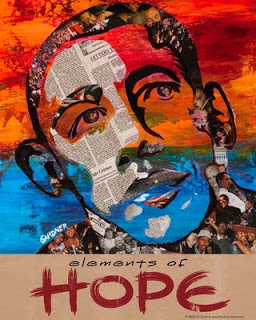
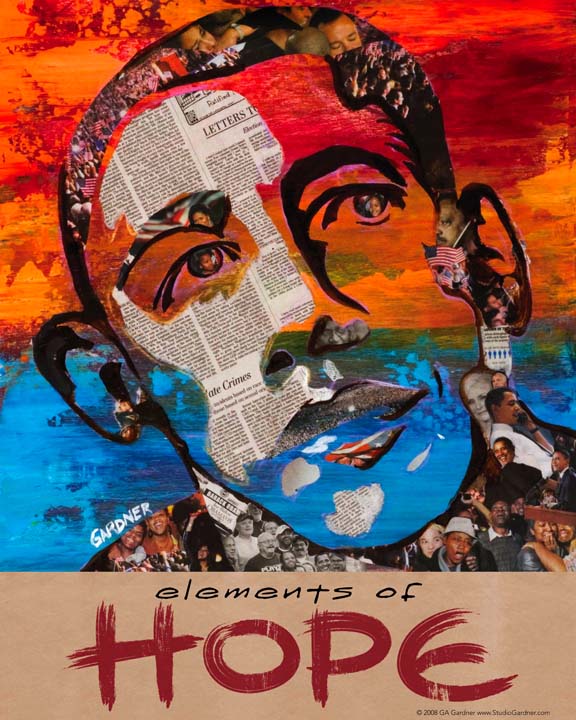
| Elements of Hope, GA Gardner, 2008 |
This edition of Interview Fridays features the Trinidadian mixed-media artist, GA Gardner speaking about art and politics.
Your piece Elements of Hope was a collage featuring Barack Obama’s face. On your blog, you said that when you created the piece, you wanted to focus on an issue Obama neglected to talk about on the campaign trail: race. How did you tackle race in this piece? What were you saying that he didn’t say?
While not often discussed overtly, Barack Obama indeed had to deal with race quite a bit on the campaign trail. I merely tried to integrate the issue into visual images in an attempt to sum up the person and the many facets of race and identity he dealt with while campaigning to become North America’s first African American President. I wanted to create a holistic perspective, visually weaving the issues together and creating a meaningful collage that would remind us of where we were at that moment in history.
If you were to make a current Obama piece what would be the focus? How would your approach/subject matter change or stay the same?
The Elements of Hope collage would attack the same issues facing him today as those from several years ago. I don’t know that I would be interested in doing such a piece again as it would be awfully complicated and even more political.
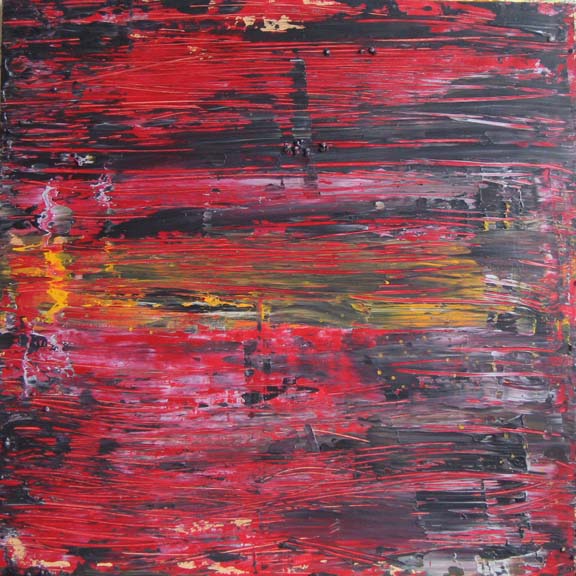
What was the inspiration for the piece “Streets of Brixton, London” besides the obvious location?
Brixton is an area in London that is very culturally diverse and reminds me of Brooklyn in that there is a certain grittiness to the area. I became intrigued by the textures of the streets of Brixton, that is, I wanted to show elements of life in this neighborhood. From an abstract approach, I utilized colors naturally found on the streets to create images that evoked the same sense of being in Brixton.
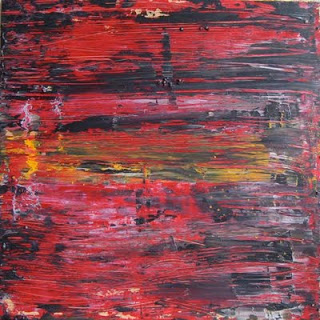 |
| Streets of Brixton, London, GA Gardner |
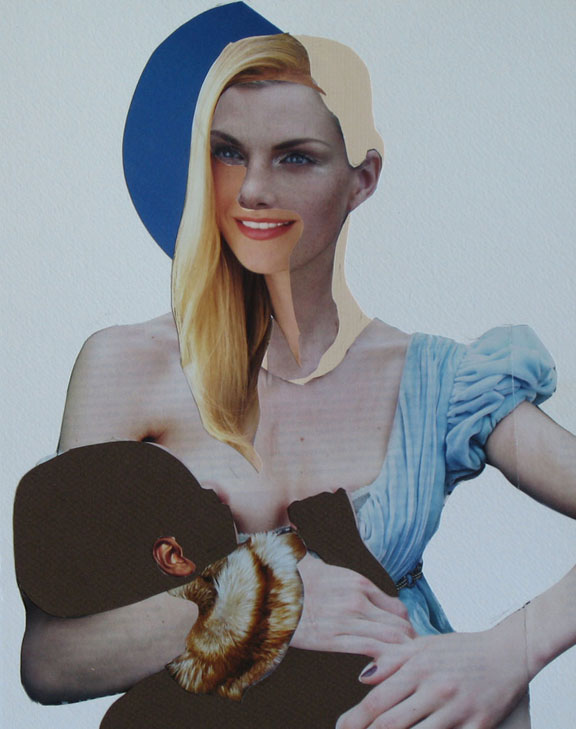
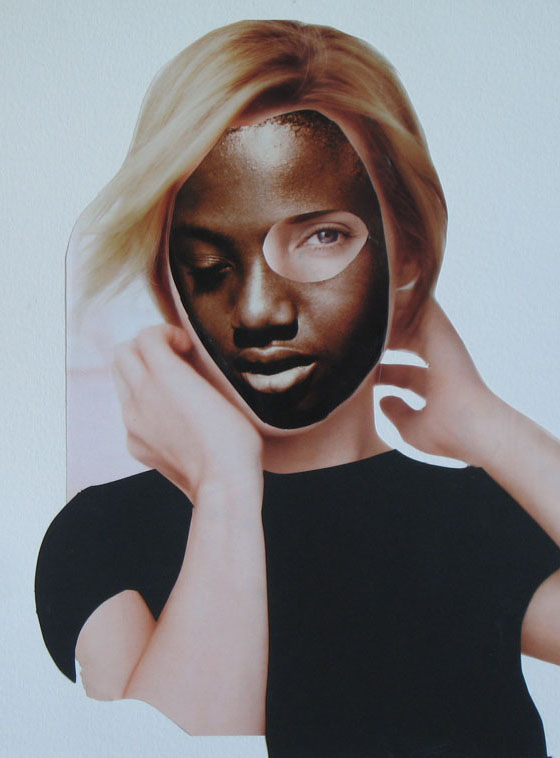
You have two pieces that can be read as political statements which are Black Faced and Foster Mother & Child Can you talk about the politics of these pieces, racial or otherwise? Do you see them as political? And if not, what are they? What is the message if any?
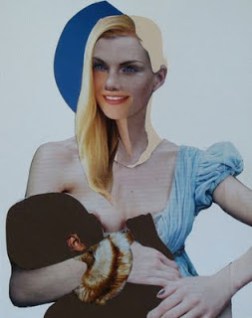 |
| Foster Mother and Child, GA Gardner |
I can see how these pieces can be viewed as political. Sometimes I am driven to create an image based on an ideal that I have in mind; other times I show up at the canvas without preconceived ideas and a piece naturally evolves. I did not set out to create political pieces in these cases, the politics found me. Foster Mother and Child was a piece created out of the need to show that being a mother to a child is not predicated on race or giving life to the individual. I wanted to show the love from mother to child, but when I began working on the piece I found that the piece had already been done successfully and perhaps even overdone throughout history.
Subsequently, I felt the need to approach the subject matter from a different angle. A good friend of mine became a foster parent and over the years had grown very attached to the child who felt like her own. When it was time for the child to be adopted or reunified with her biological parents, it was very emotional for my friend. I began to question the significance of this experience and wanted to show the depth of a bond between a caregiver and child regardless of the circumstances under which the bond was formed. This was the idea behind Foster Mother and Child. It was not political, nor was it intended to address race. To the extent that the image is disturbing to many, it may then indicate that we have not yet resolved our issues regarding race.
In Black Faced, I was really hooked by the aesthetics of the piece. I wanted to show these two faces together, one black male’s face juxtaposed over a white female’s. I loved the look; it was almost zen-like in its peaceful harmony. The piece was not meant to call up the negative issues of race, though I can see how it can be interpreted that way as a sort of masked, white person’s negative portrayal of a black person’s character.
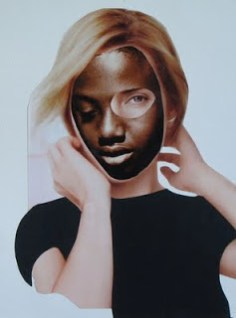 |
| Black Faced, GA Gardner |
If art is a selfish means of expression, in what ways has your body of work been unselfish? As in community-oriented or speaking to the black experience and along those general lines? Or do you produce for the sake of art? Do you think art (art from black people, the third world, etc) has the luxury of being produced for art’s sake?
A fine artist can be a selfish person as he is not really producing work with a client in mind; instead he may be working for himself and later getting the work to an audience that will appreciate the direction, aesthetics etc. In many ways, artistic expression can be thought of as “art for the mind’s sake,” in the sense that creating art helps the artist unclutter his/her mind leaving room for the next piece of work. I create various kinds of art– some are directed towards a specific issue, others are abstract, and still others are purely conceptual. In these various styles, I am always trying to lead with the issue at hand and take the audience along for the ride; in that way, the artistic form is co-created, not merely a selfish pursuit. We all have the luxury of producing fine art, I believe it is a choice the individual makes not based on location but perhaps based on what he feels comfortable creating.
About the Artist: A native of Trinidad and Tobago, Gardner has studied fine art at San Francisco State University and mixed media art and animation at The Ohio State University where he earned a Ph.D. in Art Education. He is the founder of DECATA (digital effect, computer animation, and traditional animation) Festival. He lives and creates in Washington DC, with studio presence in New York City, London and Paris. To find out more about him and his art, visit his website: Studio Gardner


Leave a Reply