
Last month, distinguished Trinidadian author and playwright Zeno Obi Constance released a new book, The Man Behind the Music: The People’s Calypsonian, on the life and music of noted calypsonian Emrold Phillip, Brother Valentino. Constance is a self-proclaimed calypso collector and has been studying Valentino’s work since his university days. This interview, which will be presented in two parts, covers the story behind the book, his friendship with Valentino and his thoughts about the state of calypso music in Trinidad & Tobago.
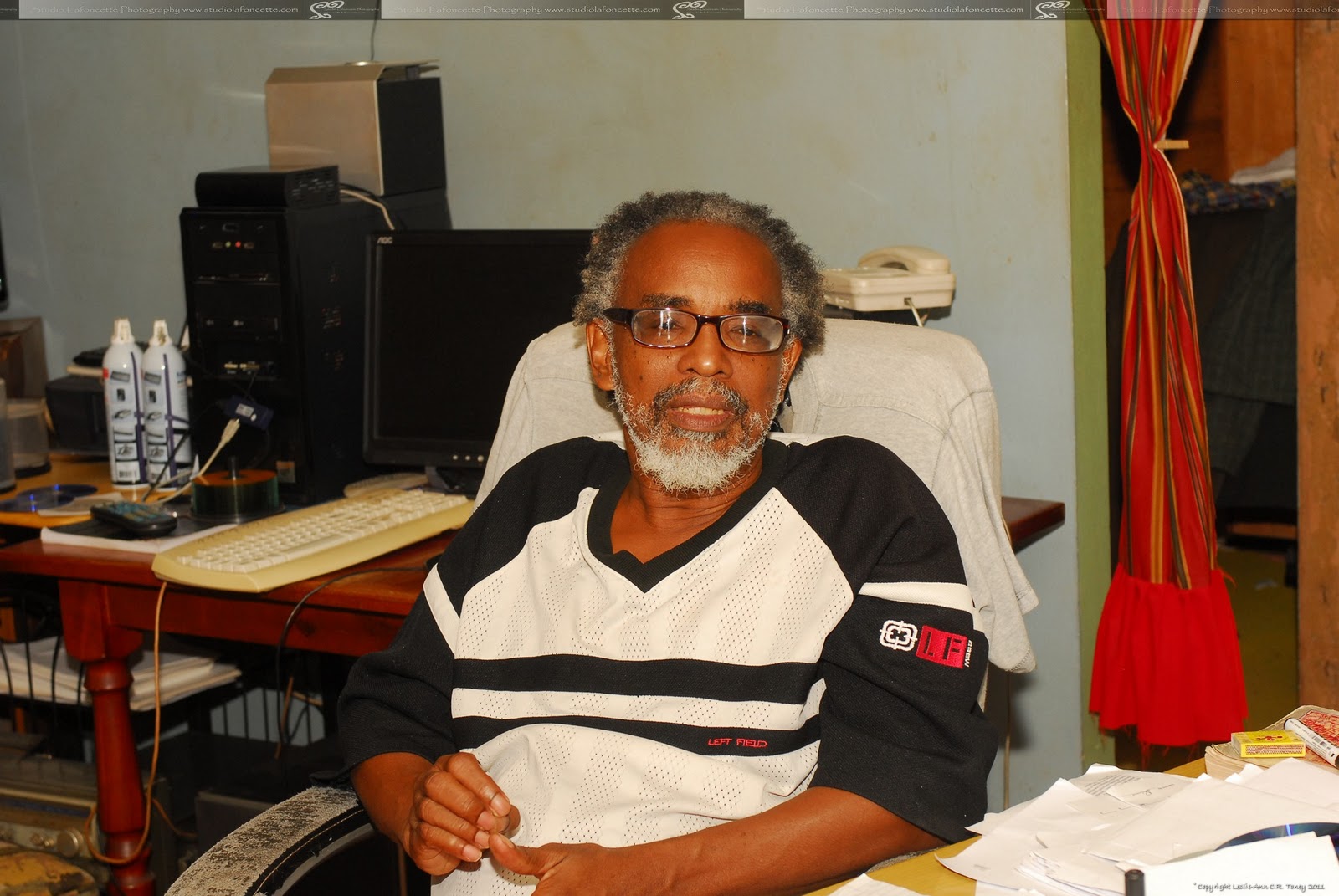 |
| Zeno Obi Constance |
What are your thoughts on the offerings at this year’s Calypso Fiesta competition?
I have stopped going to Calypso Fiesta about 25 years now. I stay home and record because I’m a calypso bandit also called a pirate or a collector. I stopped going since the eighties when I felt that the fiesta picnic aspect of the competition didn’t work with the fact that it’s a competition. People come to try to sing to go to the next round and the audience doesn’t give them an opportunity. Some people get booed before they start; some people play rhythm section when contestants are trying to sing and that disgusted me. There’s a couple things about the fiesta this year that were positive. One was Benjai and Karene Ashe giving us two up-tempo songs. That is two more than we had in the years gone. We had reached the point where the Calypso Fiesta was a kind of funeral and I know the reason why we got to that. It had to do with Soca. With the coming of Soca, Calypso people went into a corner of “We not going to make any soca style calypsos. We’ll just make two so-called traditional lyrics calypso.” The other problem I have is that calypso is losing its character, its theatrical character. Too many people are appearing to the calypso world and singing other people’s songs. They have no personality, no way they do things. Long time, a calypsonian could be a very poor calypsonian, but we like him because he does stammer, or sing out of time, he writes his own songs. Look at the finals in the last few years; you have 11-15 people in there and two thirds not singing songs that they wrote. So that begins the dreary nature of the thing even though the writers are good, you don’t want to hear the same person six times.
So how does Brother Valentino fit into the funeral as you call it of calypso?
Well there are a whole number of calypsonians who sing in that particular vein. He’s never been an up-tempo person anyway. Valentino is a lot of minor key, slow stuff but it has its place because it is poetic and very powerful. Unfortunately, there are a lot of slow things that are really poor and foolish too. I cannot stop that problem. It will solved when we decide not to have score sheets to mark down lyrics this is.. but just people who have calypso in their blood who can say this a good song well done, well performed. Now we have this system where people who supposed to know music judging to see if the scales are right, the change keys, cadences. Who cares? I know nothing about music but I could feel when the music is wrong. I could feel when this music doesn’t work for this calypso.
What is it about Valentino that keeps bringing you back to him in your work?
What is it about Valentino that keeps bringing you back to him in your work?
It’s not that I wrote about him before and now I have this book. I did Valentino for my Caribbean thesis when I was at university. I went to a couple shows and was fascinated by the conscious lyrics and the kind of image he had. When I came to the campus and got into the whole Black Power thing, one night I went to a concert in Woodbrook. NJAC used to have these shows at a house with one performer singing about 9 or 10 songs and a little talk. That’s when he fascinated me and that’s when I decided to do my thesis on him. Of course he knew nothing about it. Eventually I put it into a little book. I didn’t go to talk to him. I was too shy so I sent a friend with the book. He[Valentino] sent two tickets for me and said come and talk to him and we became fast friends. But my Caribbean thesis was very poor as a book in this time. This one is much bigger. It’s almost 40 years of Valentino’s work.
Now because we have remained friends over the years I have become his collector. I have all his music; even more than he has. When he comes by me he’ll say, “you have anything for me?” and I might have two DVDs from some show that was on TV, something from the radio. In fact, there are only two songs of Valentino’s that I don’t have and he doesn’t have them either. Calypsonians don’t usually have their own music unless they record. This question you ask me is the same question Short Pants asked me the other night, this preoccupation with Valentino. But this was just a development of that first work into something that we had planned to do for a long while: a book that would be a definitive look at what he has done. I took a different approach. I didn’t analyze the songs. I just talked about how he came to write these songs. How he happened to do “Stay Up Zimbabwe” and the story behind that. He never made any money from that song because people “tief” all the money and run. The song was big in America and Africa, but the promoters never brought the money back to him. It’s still not complete in the sense that there are a lot of things you could write about. I think what is missing is perhaps the musical scores.
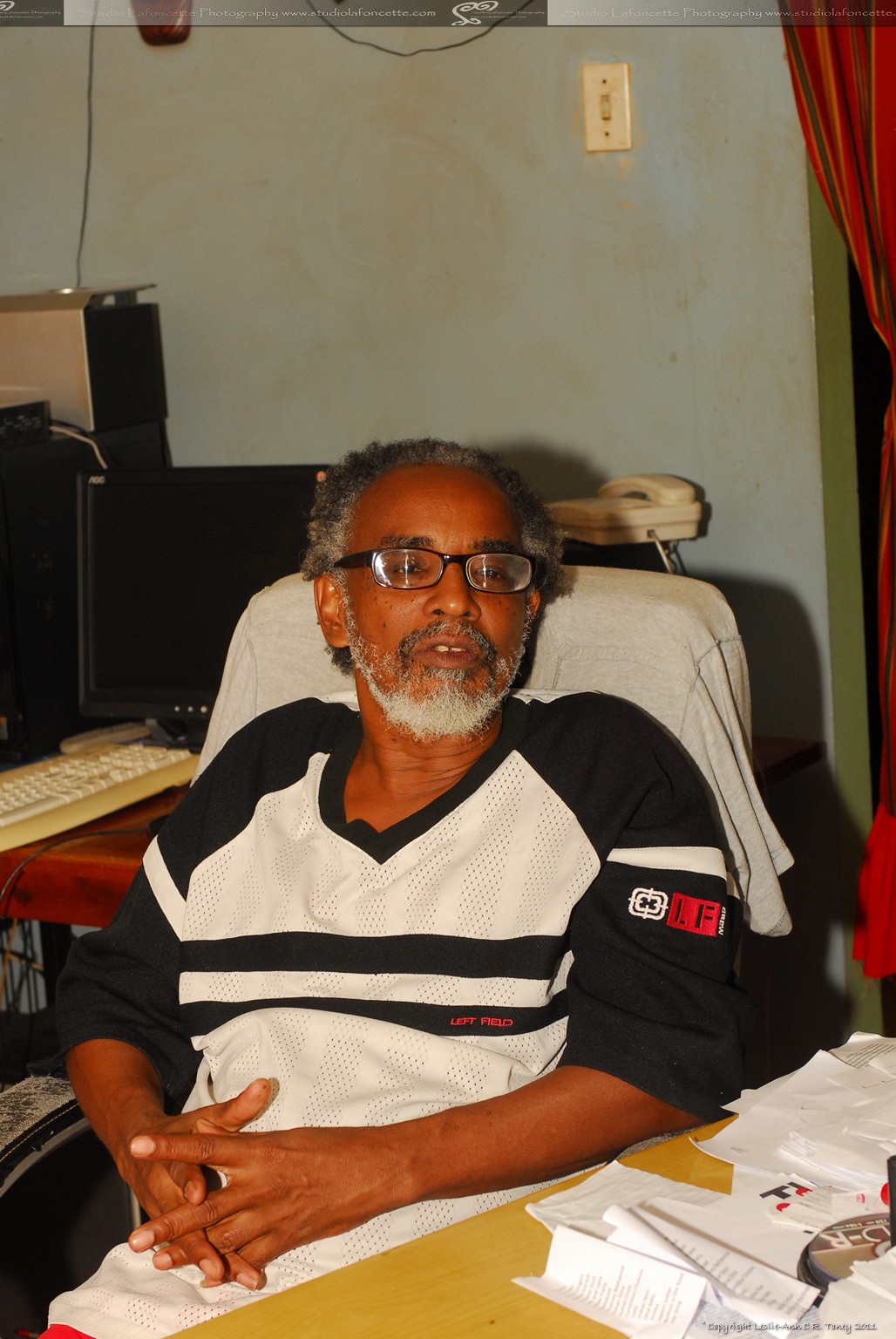 |
| Zeno Obi Constance, author and playwright |
How has he evolved over the years that you’ve known him as a calypsonian?
Valentino was most popular when he was anti-popular, when he was the anti-hero, the voice you wanted to hate. Remember in the 70s with Black Power, people in the street were divided. In every household there was one person in a dashiki or who became a Rasta and they were outside the family belief. They’d hear “You going and listen to that man? You going and follow Daaga?” And Valentino became the voice of the Black Power revolution which was a kind of bad thing because as it turned out when the revolution died down, the mass appeal he had as an anti-hero died. The other people who were there survived. Stalin didn’t stay with that mood and therefore he could survive. So that whole being associated with Black Power meant that when it died his popularity died. I think he became popular again in this century in the sense that he became a figure head for somebody that is honest and true in the calypso world and some of the songs survived.
If you had to answer Valentino’s question “Where Kaiso Went?” what would you say?
The song is based on the internationalization of Calypso. Where it went we have not reached that far again. But we have not reached there not because of what we produce; it’s what the Americans want. People keep talking about if we had fixed the Calypso or the Soca a way it would become international but that’s not true. If the Americans don’t want it they don’t want it. Americans were on calypso once. Valentino touches the tip of the iceberg with that song. The number of people who sang calypso in America then he doesn’t mention like Maya Angelou for instance. There were hundreds of people singing Calypso in America. It was on sitcoms like the I Love Lucy Show and the Dick Van Dyke Show. Calypso was so big to the point where Harry Belafonte’s album became the first million seller in the history of the world. It was a massive thing until they got fed up of it and they went to look for music somewhere else.
So the song really talks about that. If America wanted to steal it as they did Rock & Roll from black people, they could’ve. So they’re not interested. You know what’s a good example of that? “Who Let The Dogs Out?” A half-starved song that they would not release here became a big hit outside because the Americans like to say “woof woof” It was a lil’ stupid song but they say they like it so it became a big song. There was no way that Anselm Douglas could anticipate, “I’ll write this song and it’ll be a big song” He had no idea what he was doing.
PART 2 NEXT FRIDAY!
Zeno Obi Constance is without a doubt one of the most prolific writers of his generation. Although he has already added numerous plays and books to his portfolio. Zeno continues to produce work to his day and he shows no signs of exhaustion. He has been a teacher at the Fyzabad Composite School since 1977, is a playwright, author and basketball official. His books include another career biography of calypso icon Brother Valentino (Poet & Prophet 1984), Tassa, Chutney & Soca 1991 which outlines the East Indian contribution to the Calypso. He has also published a collection of fourteen of his plays in two volumes called Sheer Genius 1994. The book is available at major bookstores in Trinidad & Tobago or you can contact Constance via Facebook.

 Zahra Gordon
Leave a reply to Anonymous Cancel reply