
Originally published July 13, 2010.
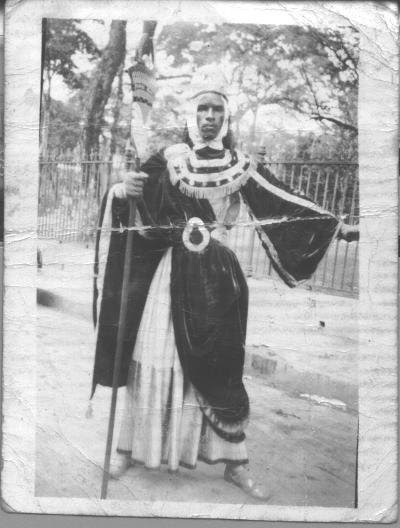
For this year’s DC Caribbean Carnival I made the last minute decision to play mas. (For the non-Caribbeans “to play mas” is to masquerade or mask yourself). Growing up in Trinidad, I played mas every year. Of course I am the grand-daughter of THE Edward George Robertson (pictured below as “King Ahab”, Trinidad Carnival 1948), who was an hardcore mas man and would always remind me, “It in yuh blood. Mas in yuh blood.”
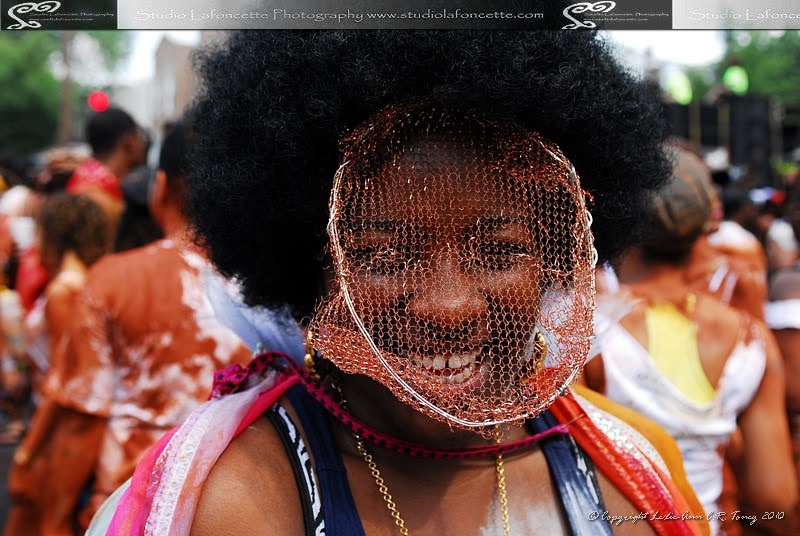
But mas has changed drastically since the days when my grandfather paraded the streets of Port-of-Spain. And I honestly don’t like some of the changes. Granted, I do have a penchant for old-fashioned-ness, but this is more than that. The mas community has become bogged down with bikinis, beads, feathers and “all-inclusive” middle-class elitism. Who but the middle-class or those pretending to be middle-class could afford to pay $600US for a costume worn only once? This is in a Trinidad context of course. In DC, bikini-mas is just as prevalent, though its just not as pretty as in Trinidad and much less expensive. (Although I must say there were one or two bands who really looked good this year, bikinis and all. Not to mention that there are a few people, in the mud band or thereabouts with political satire portrayals, the Jab-Jab with their oil/paint mas traditions, not to mention the few fancy sailors and Indians)
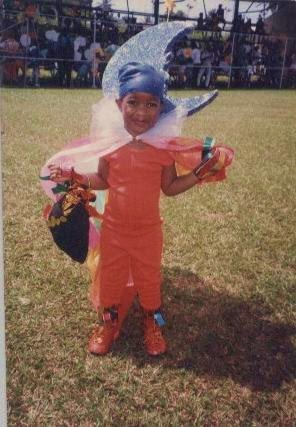
The whole idea of portrayal and creativity has disappeared. How can it be that the band with the “nature” theme and the band with the “hidden treasure” theme have almost identical costumes? Most importantly, mas, and the related Carnival traditions – calypso, steel-pan – were deeply rooted in cultural resistance, in expressions of innovation and creativity, ingenuity and existed initially in antithesis to middle-class pretension. But in the mainstream this aspect seems to be missing, forgotten. So in lieu of my penchant (and adoration of Aldrick Prospect. Have you read The Dragon Can’t Dance by Earl Lovelace?), I made the costume myself. Using the cape from my first costume ever (Trinidad, 1992, Portrayal: “Moon on a Rainbow Shawl” pictured below) I became “February, De Mas Avenger: A Black Power Super Hero.”
It was some kind of luck or fate that landed some protest posters in the hands of my sister a few weeks prior. An activist friend who had been in Trinidad in solidarity during the 1970 Black Power Revolution (aka February Revolution) was cleaning out and decided to make a gift of the posters. And here I was, on whim deciding that I wanted to portray “black power” for Carnival. But I needed a slogan. The costume needed to be rooted in an actual event, in real history. And then it all came back to me: the articles I had read in my Caribbean history book about the revolution, the posters, the “state” of mas. And so February was born.
I photocopied the flyers, pasted some poster board with newspaper and made a placcard. Got some red paint and wrote the words “Black Power” above a poster that read: “A car for the Queen, Rum for Calypsonians and Mass men. Bring Carnival Back to the people who made it. BAN JC’s Show” On side 2, I identified myself again in red paint: “February Mas Avenger” The second poster read “Who contributed more to Carnival? Calypsonian, Steel Band, Masquerader. Not JCs Queen. BAN JC’s show”
From what I’ve learned speaking to family members, the JC’s Queen Show was a beauty pageant held only at carnival. The contestants were all white and winners were given cars, and lots of money, although, beauty pageants were not historically part of the Carnival tradition and really have no connection to Carnival (and certainly not cultural resistance). Meanwhile the Calypso Kings and band-leaders were rewarded, evidently, with tokens and trinkets. Other flyers I was unable to use called the show “racist,” asked questions such as, “Is a white girl better than you?” and called the show an example of “cultural domination.” The protesters called for an end to the degradation of local culture and artistry. Carnival in Trinidad usually culminates on the two days before lent and these protests show the interconnectedness of resistance and art. The Black Power Revolution did not only call for a change in cultural norms but also the economic hardships of black people in Trinidad.
While on the parade route, I bumped into one of the Grenada Jab-Jab regulars, who my sister has taken great shots of and named “Uncle Jab”. He stopped me and asked about my portrayal. After I explained, he looked at me with great sincerity and said, “God bless you young lady.” I’d never spoken to this man before but I think he was proud of me. A few people, when they saw me smiled and made fists and I reciprocated. Anyone who assumes you can’t make a statement and have fun is wrong. I paraded with the mud band and came down Georgia Ave jumping, waving, and wining with my fist pumping in the air and revolution on my mind.
My idea of bringing “Carnival back to the people who made it” was bringing Carnival back to meaning, to resistance, to Africa, like Nappy Myers sang, “bring[ing] back de ole time days.” I wanted to avenge history and mas.
Love,
February


Leave a Reply